
When choosing hardwood flooring, maple and oak are two of the most popular and timeless options available. Both species are durable, beautiful, and well-suited for a wide range of interior styles, but they each offer a distinctly different look and feel.
Maple hardwood flooring is known for its smooth, subtle grain and lighter, more contemporary appearance. Oak flooring, especially white oak, is prized for its rich character, visible grain patterns, and versatility in stains and finishes.
So how do you decide between maple vs. oak flooring? The right choice often comes down to the style you want to achieve, your home’s environment, and how much natural character you want your floors to display.
Below, we compare maple hardwood flooring vs. oak across appearance, durability, staining, hardness, and more.
| Feature | Maple Hardwood Flooring | Oak Hardwood Flooring |
|---|---|---|
| Color & Appearance | Light, creamy tones with a clean and modern appearance | Warmer tones with more natural variation and character |
| Grain Pattern | Smooth, subtle and uniform grain | Prominent, open grain with more texture |
| Staining | More difficult to stain evenly | Takes stain exceptionally well |
| Durability | Very hard and resistant to wear | Durable with excellent long-term performance |
| Hardness (Janka) | Hard maple: ~1450 | Red oak: ~1290 / White oak: ~1360 |
| Humidity Compatibility | Slightly less dimensionally stable | Better stability in changing humidity |
| Cost | Similar to slightly higher, depending on grade | Wide range of pricing and availability |
Red Oak vs. White Oak
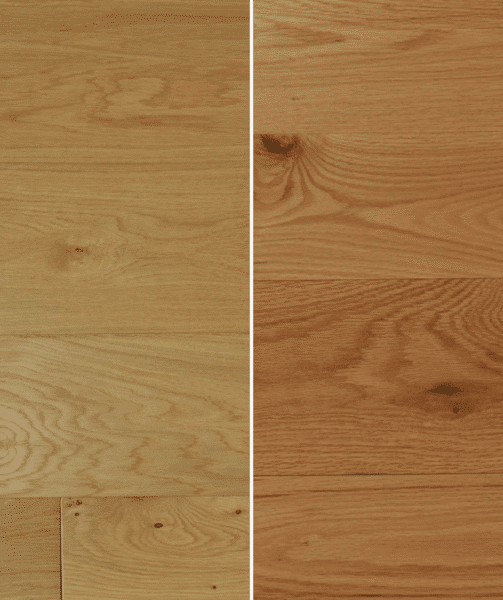
Red oak tends to have warmer, reddish undertones and a more traditional appearance, while white oak features cooler brown and taupe tones with greater dimensional stability and a more contemporary aesthetic.
White oak has become especially popular in modern wide plank flooring because of its versatility and ability to take lighter stains and natural finishes beautifully.
Color & Appearance
One of the biggest differences between maple vs. oak hardwood flooring is the overall appearance.
Maple hardwood flooring typically features lighter cream, beige, and pale blonde tones with minimal color variation. Its smooth surface and subtle grain create a clean, refined look that works especially well in modern, Scandinavian, and contemporary interiors.
Oak flooring offers more natural variation and warmth. Red oak often carries pink or reddish undertones, while white oak leans more neutral with soft brown and gray hues. Oak’s more visible grain and texture give floors added depth and character.
For homeowners looking for a sleek and understated appearance, maple may be the better fit. Those wanting a floor with more movement, texture and rustic charm often prefer oak.
Grain Pattern
The grain pattern is another major distinction between maple hardwood flooring vs. oak.
Maple has a tight, closed grain with a relatively smooth and uniform appearance. This creates a more subtle visual texture across the floor, which many homeowners appreciate in minimalist or contemporary spaces.
Oak, by contrast, features a more pronounced open grain pattern. Cathedral grain formations, natural knots and visible texture are all common characteristics, especially in wide plank oak flooring.
Because of this, oak flooring tends to showcase more natural character, while maple delivers a cleaner and more consistent look.
Staining
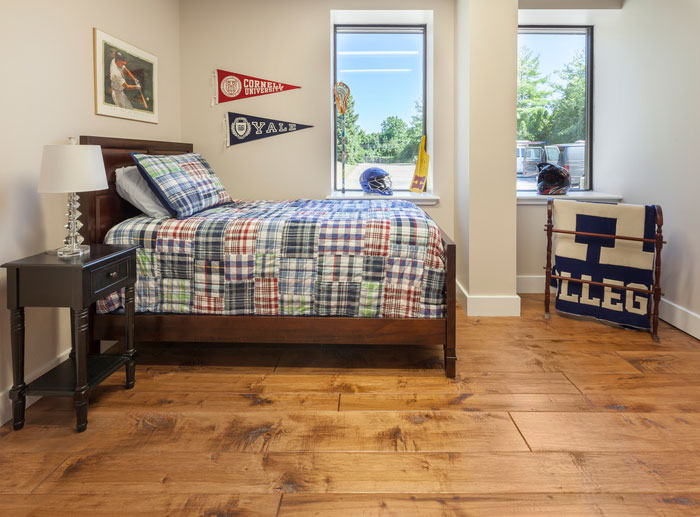 When it comes to staining, oak flooring generally offers more flexibility.
Oak’s open grain structure absorbs stain evenly and predictably, making it one of the easiest hardwood species to customize. Whether you prefer natural tones, deep browns or modern gray finishes, oak adapts exceptionally well to a wide range of stain colors.
Maple can be more challenging to stain evenly due to its dense, closed grain. Dark stains in particular may appear blotchy or inconsistent without specialized finishing techniques.
For homeowners wanting highly customized stain colors, oak flooring is often the preferred choice. Maple is frequently selected for lighter, natural finishes that highlight its clean appearance.
Durability
Both maple and oak are highly durable hardwood flooring options suitable for busy households.
Maple is slightly harder than both red and white oak, making it highly resistant to dents and everyday wear. Because of this, maple is often used in basketball courts, gyms, and other high-traffic environments.
Oak flooring also performs exceptionally well over time and has been a trusted flooring material for generations. Its visible grain can sometimes help conceal minor scratches and wear more effectively than maple’s smoother surface.
Both species provide excellent longevity when properly maintained.
Hardness (Janka)
The Janka hardness scale measures a wood species’ resistance to denting and wear.
- Hard Maple: approximately 1450
- White Oak: approximately 1360
- Red Oak: approximately 1290
While maple is technically harder, all three options are considered durable hardwood flooring materials suitable for residential use.
In real-world applications, finish quality, maintenance and overall floor construction often matter just as much as the slight difference in hardness ratings.
Humidity Compatibility
Humidity and seasonal moisture changes can affect all hardwood flooring, but some species handle these fluctuations better than others.
Oak, particularly white oak, is generally considered more dimensionally stable than maple. This means it tends to expand and contract less with seasonal humidity changes.
Because of its stability, white oak is often recommended for wider plank flooring applications and homes in regions with fluctuating humidity levels.
Maple can still perform beautifully, but proper climate control and installation conditions become especially important to help minimize movement over time.
Cost
In many cases, maple and oak flooring are similarly priced, though costs can vary depending on plank width, grade, finish, and overall availability.
Red oak is often one of the most affordable hardwood flooring species because of its widespread availability. White oak typically carries a slightly higher price due to increased demand and premium aesthetic appeal.
Maple flooring pricing can range from comparable to slightly higher, depending on the product style and grade selected.
Ultimately, the investment often comes down less to species alone and more to the quality of the flooring product itself.
Browse Maple & Oak Wood Flooring
Whether you prefer the clean sophistication of maple or the timeless character of oak, both hardwood species offer lasting beauty and durability for your home.
Explore our collections of premium wide plank hardwood flooring:
Find the Perfect Hardwood Flooring for Your Home
Still deciding between maple and oak hardwood flooring? Both offer exceptional beauty, durability, and long-term value; it simply comes down to the look, feel, and performance characteristics that best fit your home and lifestyle.
Our flooring experts at Wide Plank Floor Supply can help you compare species, finishes, plank widths, and design options to find the ideal floor for your space. Whether you’re drawn to the clean, contemporary appeal of maple or the timeless character of oak, we’re here to help you make a confident choice.
Ready to get started? Contact our team for personalized guidance and product recommendations.