Oak is one of the most popular choices for hardwood flooring. It’s strong, long-lasting, and beautiful.
Cinnamon-hued red oak and light, blondish white oak might look similar–so similar, in fact, that it’s difficult to tell the difference with the naked eye. But there are some important differences. If you’re looking into purchasing or installing either type of flooring, it’s important to know the facts and the differences between the two.
Here are the most prominent differences between red oak floors and white oak floors.
Red Oak vs. White Oak Hardwood Flooring
| Feature | Red Oak Flooring | White Oak Flooring |
|---|---|---|
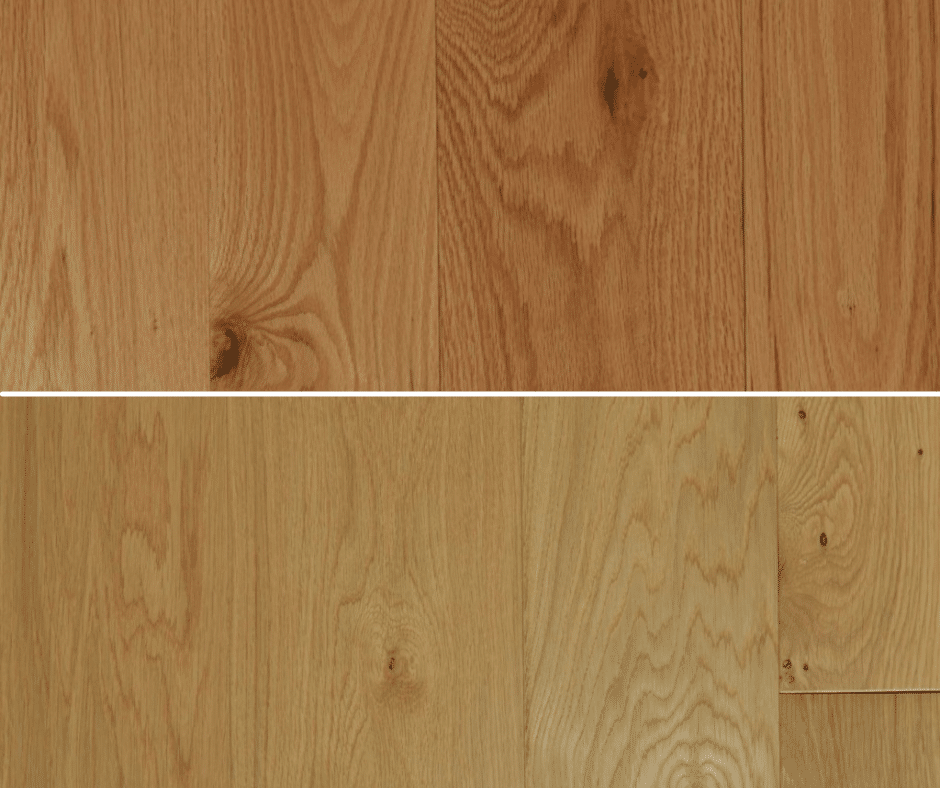
| Color & Appearance | Has pink hues and undertones. | Typically has beige hues. |
| Staining | Accepts darker stains well, but lighter stains are less likely to come through. | Accepts both darker and lighter stains. |
| Grain Pattern | Has a more prominent graining pattern and a more rustic look. | Generally has a smoother look, but depends on the grade. Character grade white oak can have a stronger grain pattern. |
| Hardness (Janka) | Janka rating of 1290. | Janka rating of 1360. |
| Cost | Typically more affordable. | Usually slightly more expensive. |
Color Differences
Of course, as the names tell you, the main difference between white oak and red oak is in the appearance of the wood. White oak will typically have beige hues, while red oak will have pink hues and undertones. Believe it or not, however, the difference is not always very noticeable to the naked eye. In fact, in some cases, contractors will have to utilize special test kits in order to tell the difference between white oak and red oak floors.
Want to Stain Your Floors? White Oak May Be a More Straightforward Choice.
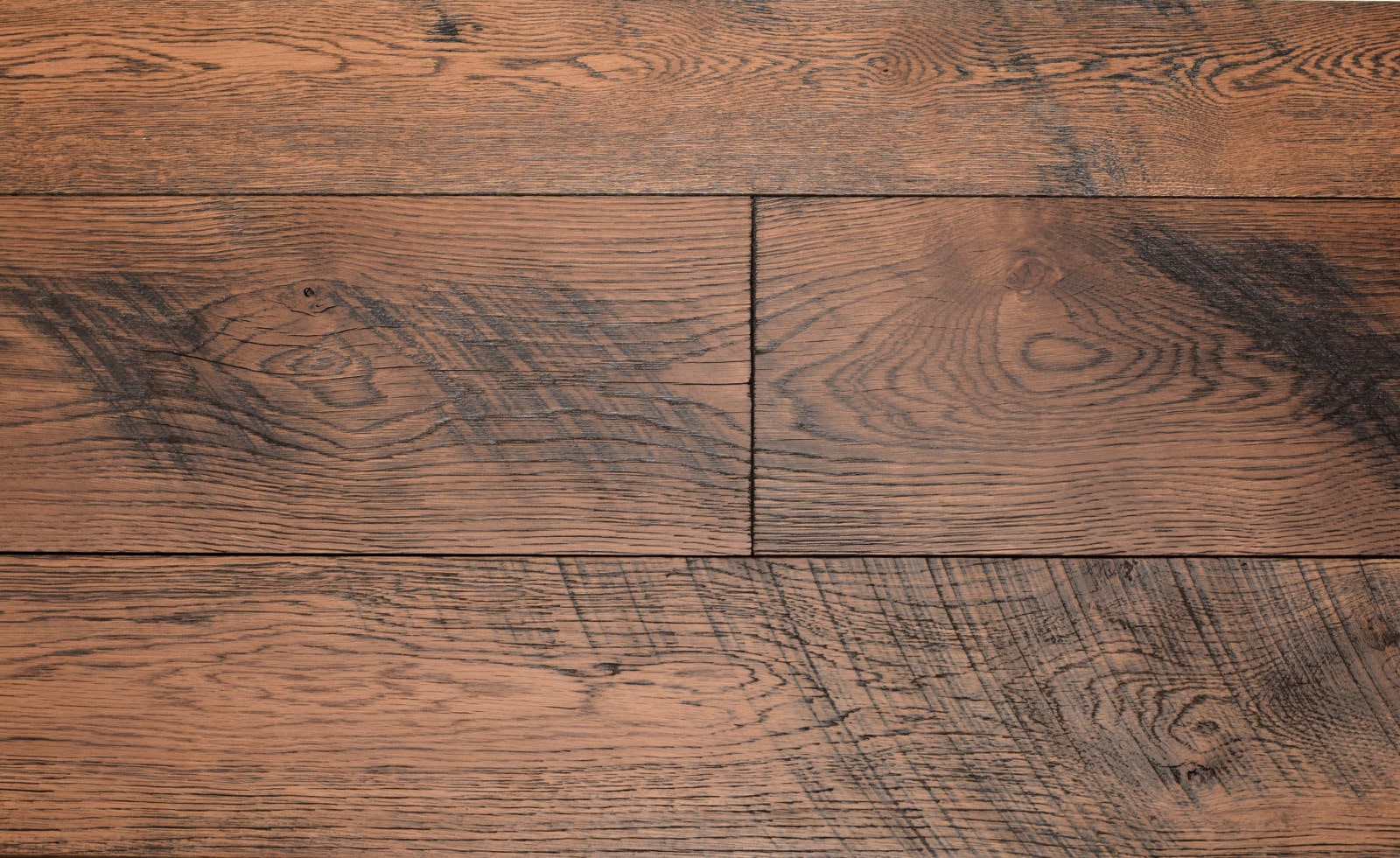
The choice is clear if you would like to customize the color of your floors––white oak will more readily accept a stain, especially if you’re going with a lighter stain like gray. However, this is not to say that you cannot stain red oak floors. If you’re going for a darker stain like dark walnut or molasses, red oak will be more likely to accept the color than with a lighter stain, as the pinkish hues of the red oak would be less likely to come through.
Difference in Hardness
There’s a slight difference in the Janka hardness rating of white oak and red oak––white oak has a Janka hardness rating of 1360 compared to red oak’s slightly lower rating of 1290. This difference means that white oak is a little bit hardier and more durable in the face of potential damage like scratches and small dents. Learn more about Janka hardness ratings and other terms in our hardwood flooring glossary.
Keep in mind, however, that the finish you choose for your floors will also have an impact on the floor’s durability, so you can counteract this by ensuring your contractor selects a high-quality finish if you choose to go with red oak.
Grain Differences
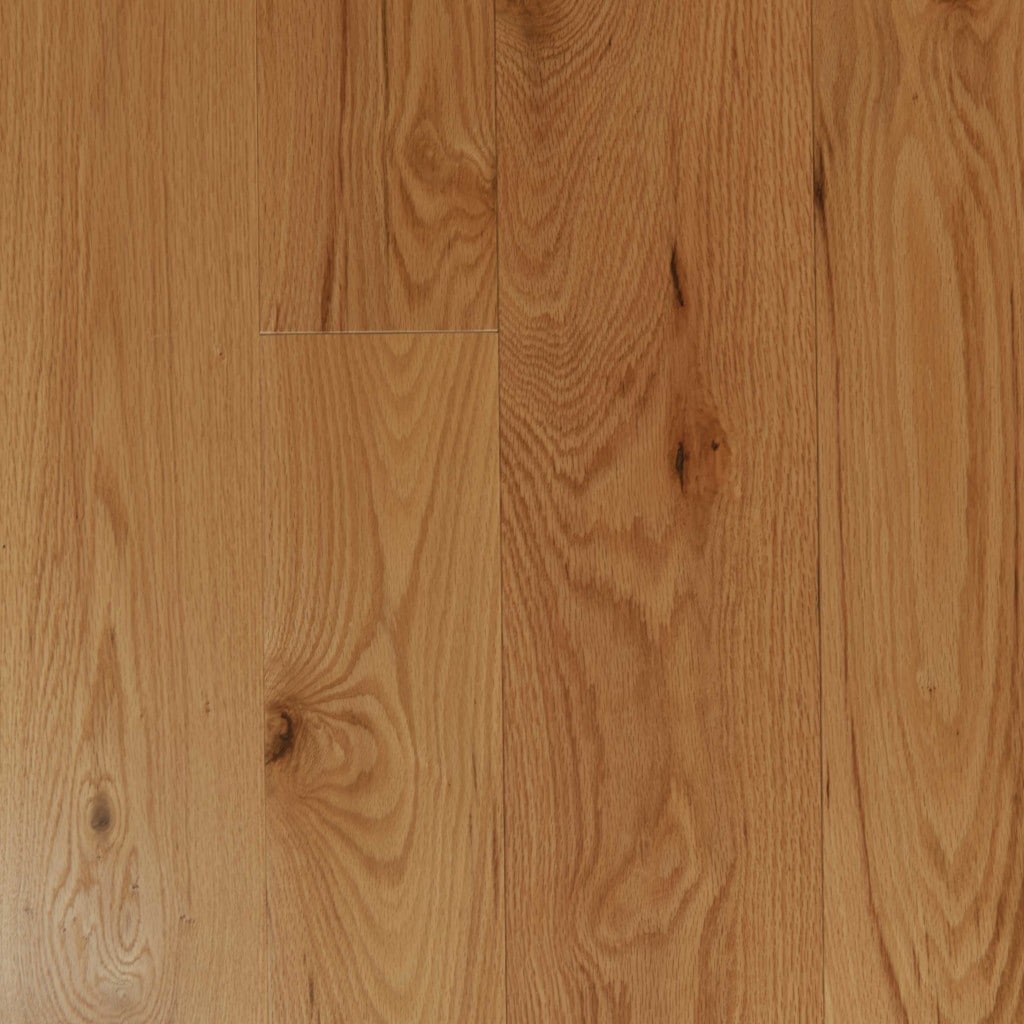
However, the graining pattern also depends on the grade of species you select. Character grade white oak, for example, will have a stronger graining pattern than a select grade white oak floor.
The choice is entirely yours, and no one species is inherently better than the other. Whether you select red oak or white oak wide plank floors will depend on your preferences in terms of color, graining patterns, and ability to accept stains. Either way, as long as you have a quality product and hire a quality contractor to install them, you’re sure to have a beautiful floor that you can enjoy for years to come!
Browse our selection of red oak and white oak wide plank floors, or contact us to request a custom quote for your project.
You may also be interested in exploring different wood cuts. For example, customers often love live sawn white oak wood.